



2026 Subaru Forester vs. 2026 Hyundai Tucson
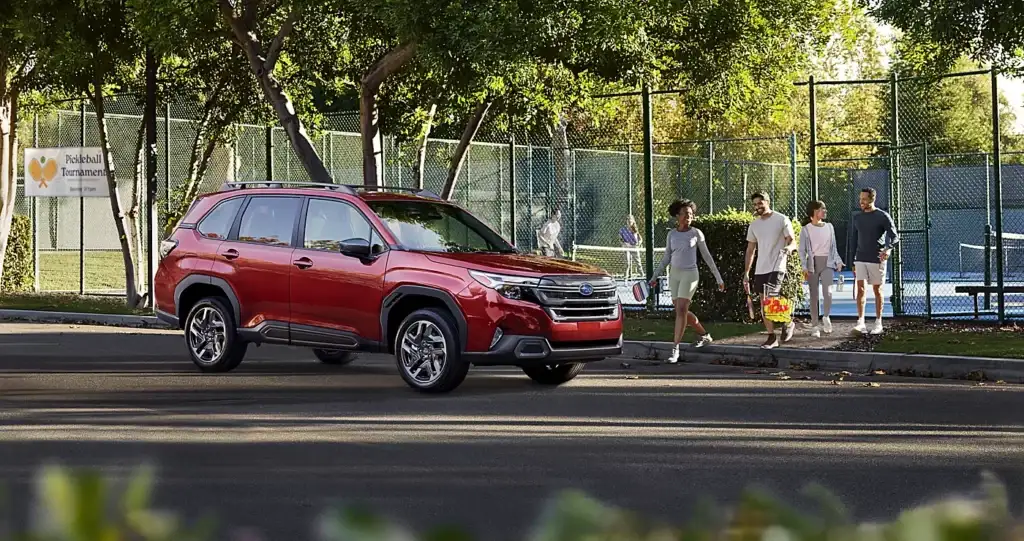
The Subaru Forester and Hyundai TUCSON stand out in the compact SUV segment if you’re looking for a family-friendly vehicle for your commute and weekend adventures. In this Forester vs. TUCSON comparison, your team at Conley Subaru explores the features of both SUVs to help you decide which one fits your Florida lifestyle.
Two Top Compact SUVs, Different Strengths
Florida families want the basics: comfort, fuel efficiency, smart technology, and excellent safety features. The 2025 Forester earned the Consumer Reports Top Pick award. It offers a more spacious cabin, improved visibility, and a quieter ride compared to earlier models. The Hyundai TUCSON features stylish touches and several advanced safety technologies.
All-Weather Capability
All Forester trims are equipped with Symmetrical All-Wheel Drive as standard. This system evenly distributes power to the wheels, enhancing traction on slippery roads during sudden Florida rainstorms. The Hyundai TUCSON charges extra for all-wheel-drive capability. Most Forester models provide 8.7 inches of ground clearance, while the Wilderness version offers up to 9.3 inches.
Interior, Cargo Space, and Practicality
The Forester offers 43.3 and 39.4 inches of front and rear legroom compared to the TUCSON’s 41.4 and 41.3 inches. The Forester’s large windows and upright seating provide better visibility, while wide-swinging back doors make loading and unloading easier. The Forester provides 29.6 cubic feet of cargo space in the rear, expanding to 74.4 cubic feet with the seats folded. The Hyundai TUCSON offers 38.7 cubic feet behind the back seats, expanding to 74.8 cubic feet with the seats down.
Although the TUCSON’s larger cargo area is ideal for weekend getaways, the Forester’s lower floor makes loading heavy items easier. Both have roof racks for kayaks when you’re heading to the coast.
Safety and Driver-Assistance Features
All Forester models come standard with Subaru’s EyeSight suite of safety features, which includes adaptive cruise control to maintain safe distances in traffic, lane centering warnings that nudge you back if you drift, and automatic emergency braking that can stop the car if it detects trouble ahead. Although the Hyundai TUCSON features the SmartSense package of infotainment and driver aids, the functions vary by model.
Technology and Infotainment Features
All TUCSON models feature a large 12.3-inch touch screen, while the base Forester trims start with a 7-inch display, which increases to 11.6 inches in higher trims. Both SUVs offer wireless Apple CarPlay and Android Auto for effortless smartphone connectivity.
The Hyundai TUCSON comes with SiriusXM, HD Radio, and Bluelink+ with built-in Wi-Fi, which is ideal for keeping your passengers occupied on longer Florida trips. The Forester adds wireless phone charging and improved graphics that simplify navigation menus, eliminating the need for cumbersome cables.
Since the Florida sun can make touch screens highly reflective, both cars use anti-glare technology. The TUCSON’s larger screen provides more space for maps when exploring new areas, while the Forester’s system positions common controls intuitively, allowing you to keep your eyes on the road.
Efficiency and Performance
The Subaru Forester achieves 26 mpg in the city, 33 mpg on the highway, and 29 mpg combined. The Hyundai TUCSON offers similar numbers at 25 mpg in the city, 33 mpg on the highway, and 28 mpg combined.
The Forester uses a 2.5-liter engine that produces 180 horsepower and 178 lb-ft of torque, which is perfect for daily commutes. The TUCSON’s 2.5-liter engine generates 187 horsepower and 178 lb-ft of torque.
Both vehicles prioritize comfort over sportiness. Road noise is minimized while bumpy roads are handled with ease. The Forester offers an excellent all-wheel-drive system, while the TUCSON boasts precise steering and stability on the highway.
Ownership Value
Hyundai offers five-year/60,000-mile basic coverage and 10-year/100,000-mile powertrain protection. Subaru provides a three-year or 36,000-mile basic warranty and five years or 60,000 miles powertrain coverage. Conley Subaru adds a 10-year/150,000-mile powertrain warranty, surpassing the usual factory offers.
Subaru is the clear winner regarding reliability. Foresters rank among the top value-holders according to Kelley Blue Book, outperforming the TUCSON when it’s time to trade in. Adhering to your car’s recommended maintenance schedules is crucial, especially in Florida. Unique challenges, such as salty air and humidity, can accelerate damage. At Conley Subaru, we offer comprehensive maintenance services and stock genuine parts to keep your vehicle in optimal condition.
Find Your Ideal SUV at Conley Subaru
Your choice in this compact SUV comparison depends on your priorities and preferences. The Subaru Forester comes with standard all-wheel drive, excellent visibility, strong resale value, and proven durability. The Hyundai TUCSON offers more cargo space, a bigger standard screen, a hybrid option, and a longer factory warranty. If you’re in Bradenton, Florida, contact us today to explore our extensive inventory, schedule a test-drive, or make a service appointment. Our team will be happy to answer all your questions.
0 comment(s) so far on 2026 Subaru Forester vs. 2026 Hyundai Tucson