



Subaru Forester Cargo Space | All Model Years
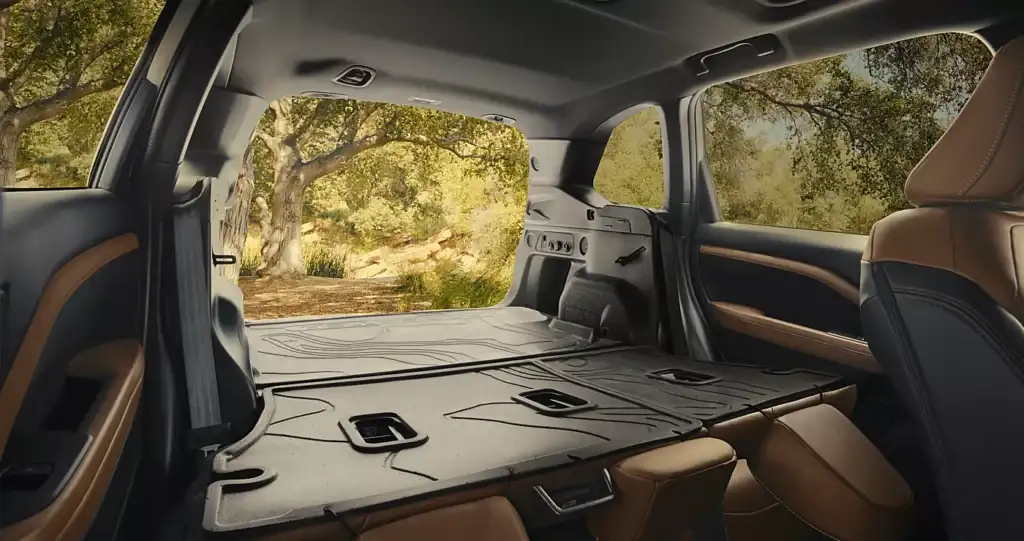
If you are comparing Forester cargo space across years, you are in the right place. Below we summarize cargo room by model year, grouping years that share the same specs. We start with the newest models, note trim and moonroof effects on volume, and call out any measurement changes between generations so you can make an apples-to-apples decision.
2026 Subaru Forester
For 2026, published cargo figures mirror the sixth-generation layout introduced for 2025 on most trims. Typical models list 27.5 cu ft behind the second row and 69.1 cu ft with the rear seats folded. Expect minor variation by trim and equipment, especially with the panoramic moonroof.
2025 Subaru Forester
Subaru separates cargo specs by trim for 2025. The Base model offers 29.6 cu ft behind the second row and 74.4 cu ft with the rear seats lowered. Premium, Sport, Limited, and Touring list 27.5 cu ft behind the second row and 69.1 cu ft maximum. This split is due largely to the standard panoramic moonroof on upper trims changing cargo height.
2022-2024 Subaru Forester
For 2022 through 2024, the Forester provides up to 74.2 cu ft of maximum cargo space with the rear seats folded. Behind-the-second-row capacity varies slightly by trim and moonroof fitment, typically around 28.9 cu ft on moonroof-equipped models.
2019-2021 Subaru Forester
The 2019 redesign increased usable space and widened the rear gate opening. Behind the second row, capacity is 31.1 cu ft on non-moonroof models and 28.9 cu ft with the panoramic moonroof. Maximum cargo volume is 76.1 cu ft without the moonroof and 70.9 cu ft with it.
2014-2018 Subaru Forester
These fourth-generation years share the same published numbers. With the rear seats up you get 34.4 cu ft, and with them folded you get 74.7 cu ft. With the large moonroof, the figures are 31.5 cu ft up and 68.5 cu ft folded. The 2018 Subaru media specs and brochures confirm these values.
2009-2013 Subaru Forester
Third-generation models list 33.5 cu ft behind the second row and 68.3 cu ft maximum without the moonroof. With the panoramic moonroof, figures are 30.8 cu ft up and 63.0 cu ft folded. These values are consistent across multiple sources and model-year examples.
2003-2008 Subaru Forester
Second-generation cargo specs vary by year and equipment. Typical non-moonroof models list roughly 32.0–33.0 cu ft behind the second row and 64.1–68.6 cu ft maximum. Panoramic-moonroof models commonly show about 29.6–30.7 cu ft behind the second row and 56.4–57.7 cu ft folded. If you are evaluating a specific used Forester from this era, check whether it has the giant moonroof, because it meaningfully changes the measured volume.
1998-2002 Subaru Forester
First-generation models typically provide about 32–33.2 cu ft behind the second row and about 64–64.6 cu ft with the seats folded. Exact figures vary slightly by source and trim, but these numbers reflect what owners can expect in everyday use.
How we interpret these numbers like an expert
-
Moonroof effect: Foresters with the large panoramic moonroof have slightly lower cargo height, which reduces measured volume. That is why 2019-2021 and 2009-2013 show dual figures for with and without moonroof.
-
Generation changes: Major redesigns in 2014, 2019, and 2025 changed interior packaging and the tailgate opening, which explains jumps in maximum volume or differences across trims within the same year.
-
Unit conversions: Canadian spec sheets for several years list liters. For example, 974 L seats-up and 2,115 L seats-down convert to 34.4 and 74.7 cu ft, which match the U.S. figures shown above.
Conclusion
From the original 1998 model’s ~64 cu ft max to the newest sixth-generation layout that ranges up to 74.4 cu ft on the 2025 Base, the Forester has stayed true to its square-back utility while evolving packaging and features. If you are choosing a Forester for cargo-heavy use, two quick checks will dial in the right fit for you: look for non-moonroof configurations when maximum volume matters, and pay attention to the 2025-on trim differences that change both the seats-up and seats-down numbers. If you would like, we can map these specs to specific trims in our current inventory so you can see exactly how much space you will have for your gear.